Resource Planner Blog
What is resource planning and why is it important in 2026?
A friend of mine, running a startup, said: "In our team, there is no manager assigning tasks. There is no weekly priority meeting where I tell everyone what matters." This might be OK in a startup, but usually you need to see who is working on what and when specific outputs will be delivered. Effective resource planning in standard projects is fundamental for success.
A simple real-world example of why resource planning matters
Imagine you are building a house. You need different people and equipment at different stages of the project. At the beginning, you need excavation machinery and workers who can prepare the land. Later, you need builders, electricians, plumbers, painters, and other specialists.
The timing matters. For example, you need to book electricians in advance so they are available when the house structure is ready for wiring. If you schedule them too early, they may arrive before they can actually do their work. If you schedule them too late, the whole project can be delayed because the next stage cannot start without them.
This is exactly what resource planning helps with: making sure the right people and equipment are available at the right time, without unnecessary waiting, rescheduling, or delays.
What Is Resource Planning in Project Management?
Resource planning is a systematic, ongoing process of identifying, scheduling, and allocating an organization's resources — people, equipment, materials, or budget — to complete a project. The goal of the process is to provide the project with the right resources at the right time to maximize outputs with optimal costs.
In human words — the person responsible for assigning tasks across different projects, which can be a project manager, CEO, or dedicated resource manager, takes a look at a grid like the one we see below on a regular basis. If the company runs multiple projects and there are more project managers involved, resource planning can take place in a regular weekly meeting.
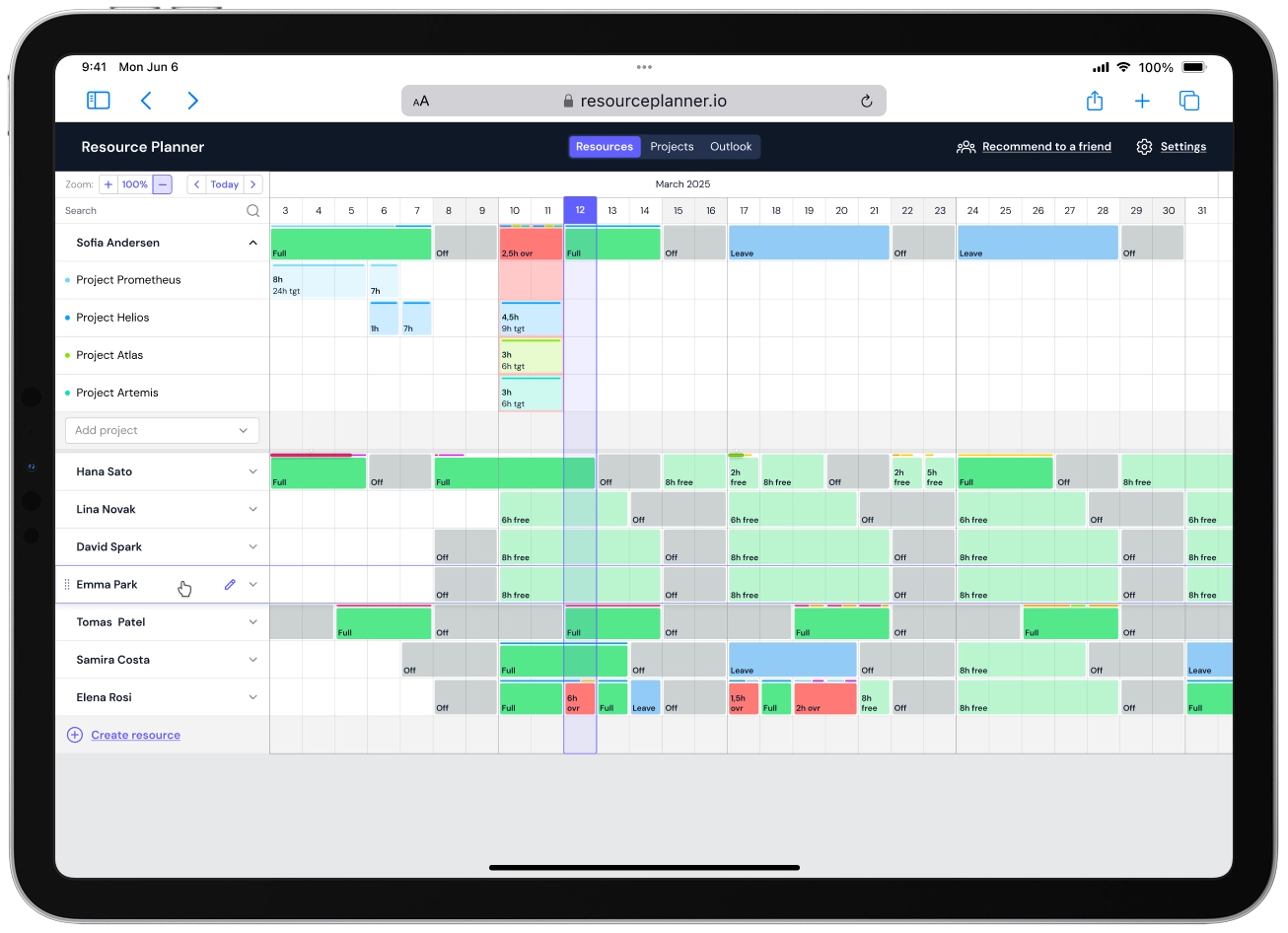
In the grid, they can easily see which team member is working on which project at a given time. Based on project needs and deadlines, managers decide who will be working on what in the upcoming period.
Using a project planner tool with a Gantt chart and drag-and-drop functionality enhances the ability to visualize and adjust resource assignments dynamically. With software like resourceplanner.io, you can easily ensure resources align with project timelines and goals.
What Is the Difference Between "Capacity Planning" and "Resource Planning"?
The terms are often used interchangeably. The reason is that both activities are often performed in a single meeting.
Resource planning is focused on short-term planning, while capacity planning is more strategic, long-term planning focused on what the team can deliver and whether it is overstaffed or understaffed.
If we stick to the example with the resource planning meeting mentioned before, managers will first discuss short-term allocation, for example for the upcoming week. Later in the same meeting, they will look at the bigger picture to see if they need to make any hiring or firing decisions considering the workload in the next quarter.
Long-term allocations might change later based on real progress on the projects.
Key Benefits and Strategic Advantages of Resource Planning
1. Operational Efficiency through Optimized Resource Utilization
A well-crafted resource plan maximizes operational efficiency by ensuring optimal use of workers and machinery. A visual resource scheduler for teams allows project managers to quickly identify and resolve potential resource conflicts, idle periods, or even bench time, resulting in minimized downtime and balanced workloads.
2. Financial Forecasting and Cost Control
Resource planning and capacity planning aid in accurate financial forecasting by providing precise insights into resource costs and allocation. To keep your cashflow under control and for a deeper dive into turning schedules into money projections, see our best practices for revenue forecasting in 2026.
3. Enhanced Team Productivity and Morale
Knowing how to manage team availability in projects significantly impacts productivity and team morale. When team members avoid unnecessary context switching and have balanced workloads aligned with their capabilities and availability, it boosts productivity and reduces burnout, contributing positively to employee satisfaction and retention.
4. Improved Project Timeline Readability and Stakeholder Satisfaction
Implementing visual scheduling tools and Gantt charts provides strategic oversight of the organization's resource capacity and needs. It allows for proactive identification and management of resource gaps and realistic deadlines. This synchronization reduces delays, enhances predictability, and substantially increases client and stakeholder satisfaction due to timely and reliable project completions.
5. Effective Dependency Management
Different stages of projects might require team members with different skills. Good resource planning helps managers see these dependencies in advance and coordinate work in the right order and schedule them only when their work can actually start.
Final Note
If you are running a small startup, you might not need resource planning. However, you can benefit from resource planning in a project of any size. Using visual scheduling solutions simplifies resource allocation processes, mitigates the risks of overload or underutilization, and promotes clearer communication and realistic deadline setting. Our research on why project managers miss milestone deadlines shows exactly how common these planning failures are.