Resource Planner Blog
No Project Manager always meet deadlines. Our research shows why.
Deadlines are everywhere in Project Management.
Sales Team promise them. Status reports revolve around them. Clients and stakeholders expect them.
But here’s the uncomfortable truth:
Almost nobody consistently meets milestone deadlines.
We ran a small research study among 20 project managers across multiple industries to understand how milestone deadlines actually work in real life.
The results confirm what many project managers quietly suspect:
Milestones are often more optimistic promises than realistic plans.
And the reasons why may surprise you.
First Surprise: Nobody Always Meets Milestones
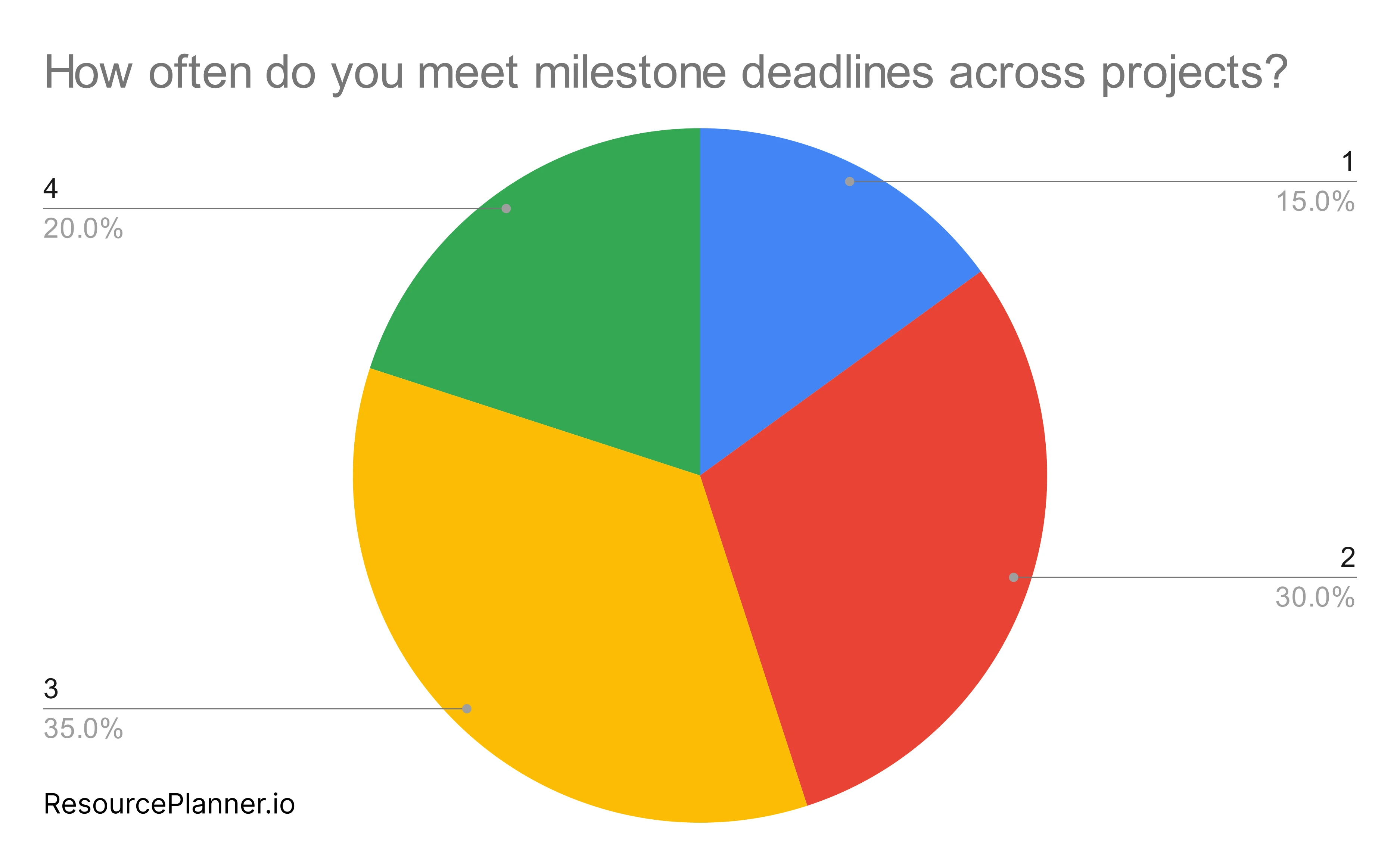
We asked project managers how often they meet milestone deadlines.
On a scale from 1 (rarely) to 5 (almost always):
- 35% answered 3
- 30% answered 2
- 20% answered 4
- 15% answered 1
- 0% answered 5
Not a single respondent said they consistently meet deadlines.
Not one.
That doesn’t mean project managers are bad at their jobs.
It means milestone planning is fundamentally difficult.
Second Surprise: Most Milestones Are Only "Somewhat Realistic"
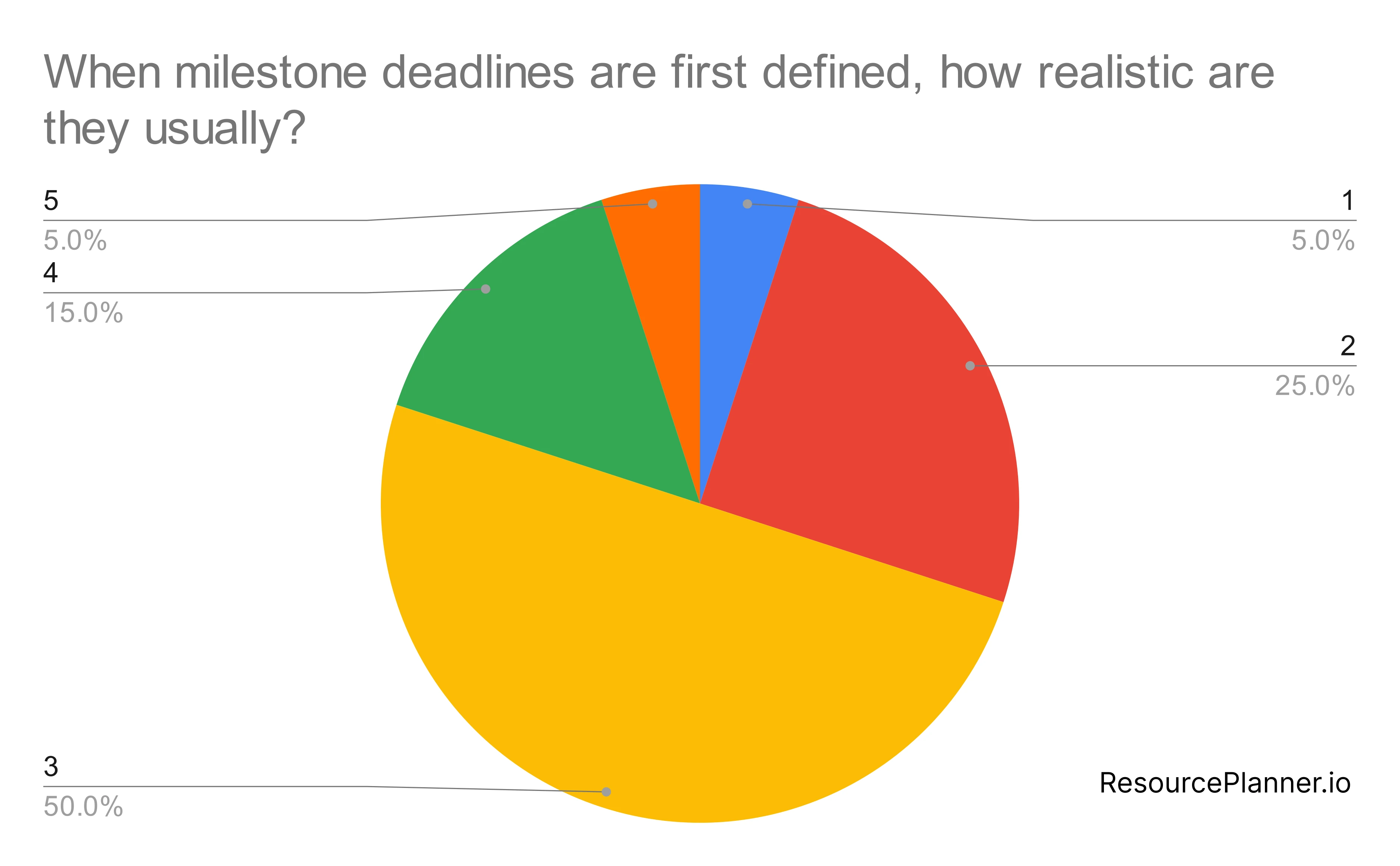
We asked how realistic milestone deadlines are when first defined.
Results:
- 50% said "moderately realistic"
- 25% said "slightly unrealistic"
- 15% said "quite realistic"
- 10% said "very unrealistic or very realistic"
In other words:
Most project managers already know milestones are imperfect the moment they are created.
Milestone planning is often less about prediction and more about alignment: Aligning management expectations, Aligning client expectations, Aligning sales commitments
Reality comes later.
Third Surprise: The Problem Isn't Delivery
When deadlines slip, delivery often get blamed (developers, construction workers...).
But the data shows something different.
The biggest causes of missed milestones were:
- Scope changes — 60%
The number one cause by a wide margin.
Projects change after planning — and timelines follow.
- Unrealistic deadlines from the start — 55%
Many deadlines are unrealistic before the project even begins.
This explains why even strong teams struggle to hit them.
- External dependencies — 25%
Other teams, vendors, and stakeholders create delays outside the project manager’s control.
- Waiting for clients — 25%
Projects often slow down not because teams are late — but because clients are.
Fourth Surprise: Most Deadlines Are Driven From the Top
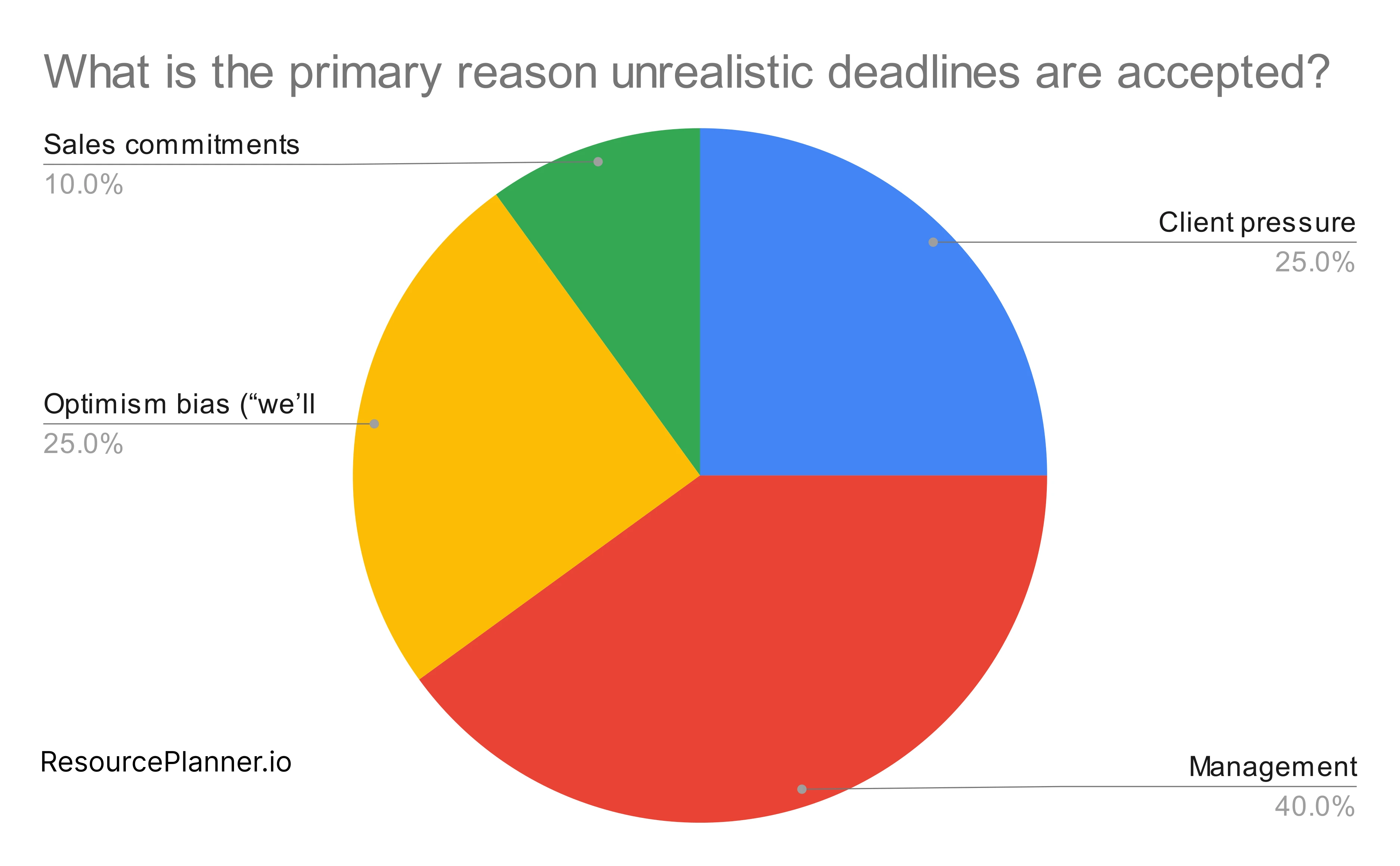
We asked why unrealistic deadlines get accepted.
The biggest driver was:
- Management expectations — 40%
Followed by:
- Client pressure — 25%
- Optimism bias — 25%
- Sales commitments — 10%
- Competitive pressure scored 0%.
This suggests milestone pressure mostly comes from inside the organization — not the market.
Fifth Surprise: Most Teams Already Add Buffers
Project managers are not naive.
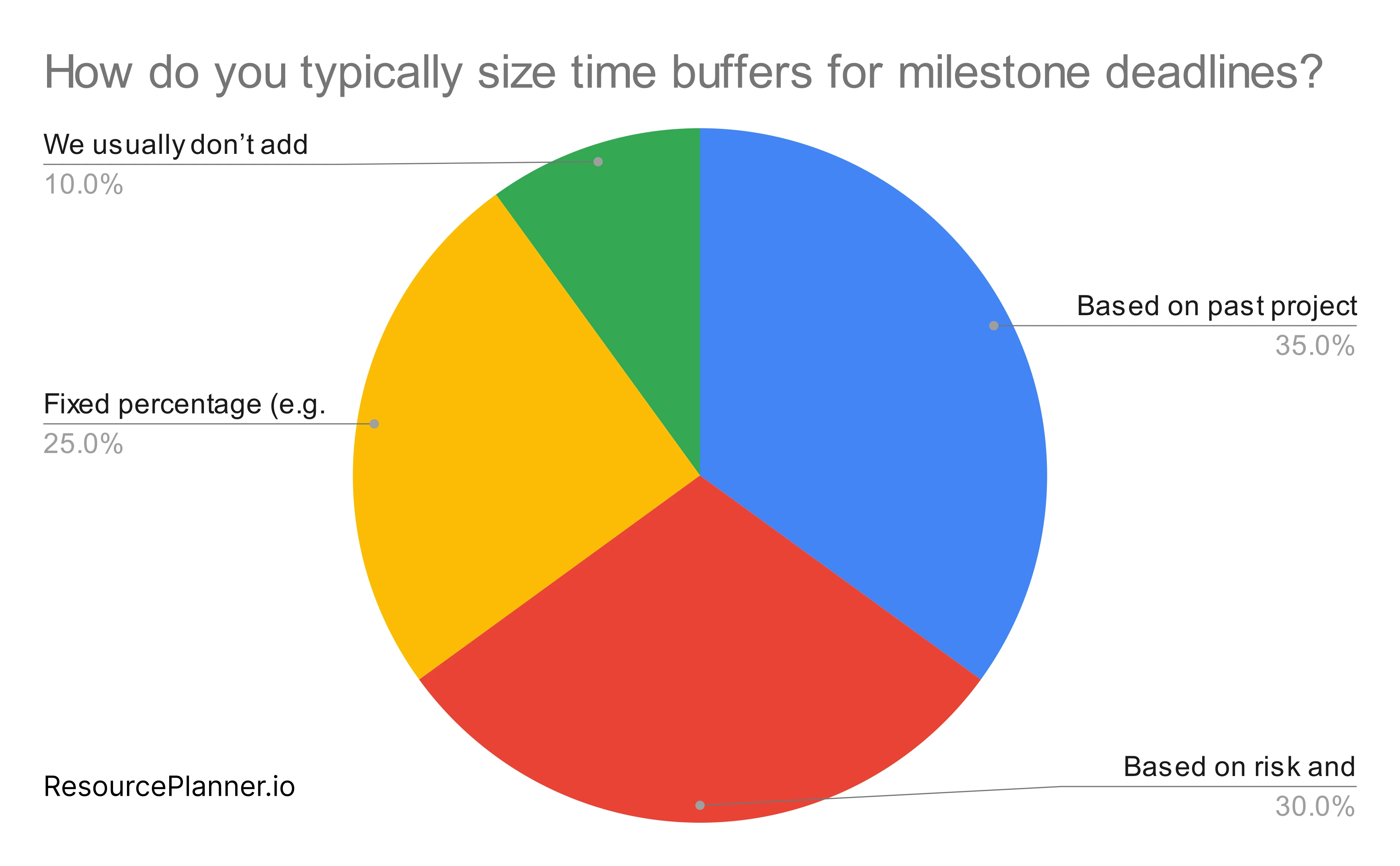
Most teams try to protect deadlines with buffers:
- 35% use historical project data
- 30% base buffers on risk
- 25% use fixed percentages
- 10% use no buffers
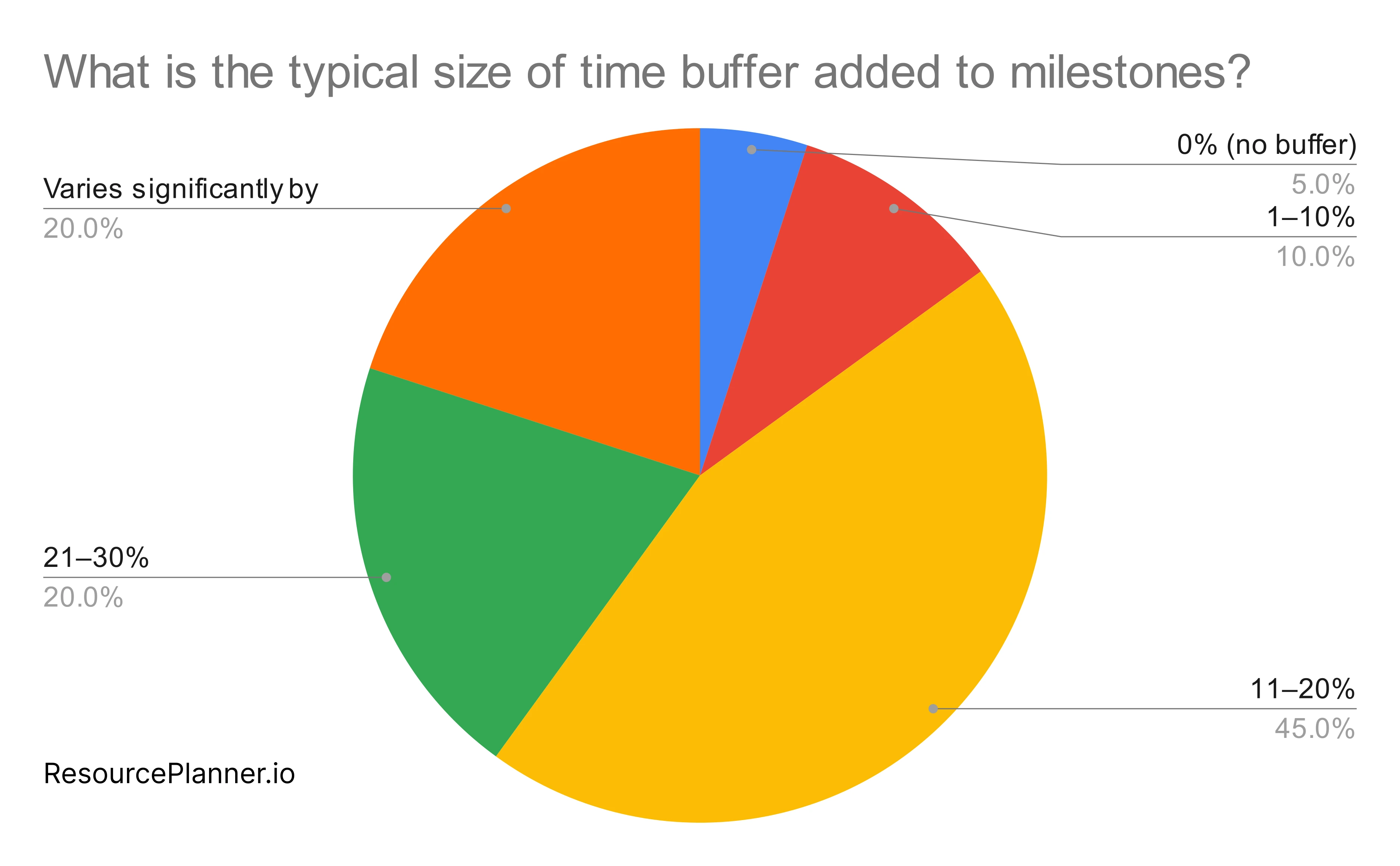
Typical buffer size:
- 11–20% → 45%
- 21–30% → 20%
- Varies by project → 20%
Despite this, milestones still slip regularly.
Which suggests: The problem isn't lack of buffers.
The Real Problem With Milestones
The core issue isn't estimation. It isn't developers. It isn't even missing buffers.
Most experienced project managers already know this pattern:
A deadline gets defined by management.
The plan gets built around it.
Reality slowly reshapes it.
Scope evolves.
Capacity shifts.
Dependencies appear.
And the project manager tries to keep everything aligned, but all combined together resolves in Milestones moving.
What Actually Improves Milestone Reliability
The research suggests that milestone reliability improves when teams:
- Plan work visually
- See real capacity
- Track dependencies
- Limit overlapping work
- Add realistic buffers
- Adjust plans continuously
In other words:
Milestones become more realistic when they are connected to actual work on a timeline.
Not just a date in a document.
If you want to see what that looks like operationally, our weekly resource planning meeting playbook walks through the cadence in detail.
That’s exactly why tools like Resource Planner. exist — to connect milestone deadlines with real workloads.
Because the most reliable milestone is not the earliest one.
It’s the one based on reality.